

This guide is for regulatory affairs managers and project managers responsible for delivering Indonesian market authorisation for a radiation-emitting medical device, whether they sit inside the manufacturer or at the appointed Indonesian distributor. After reading it, they will know which authorisations sit at entity, product, and facility level, the order in which those authorisations must be obtained, and where work can safely run in parallel.
In Product Registration Indonesia’s experience managing these dual-track filings, the single most common cause of a stalled launch is not a rejected application. It is a completed medical device technical file that cannot be lodged for izin edar alat kesehatan radiasi because the appointed distributor’s Izin Distribusi Alat Kesehatan does not yet cover the radiation electromedical category. The file sits finished but unusable while the distributor separately applies for a licence category upgrade it should have secured before the project began. That is an ordering failure, not a substantive regulatory one, and it recurs because the two regulators involved run entirely separate licensing systems with no shared queue or timetable.
Why Radiation-Emitting Medical Device Registration in Indonesia Runs on Two Tracks
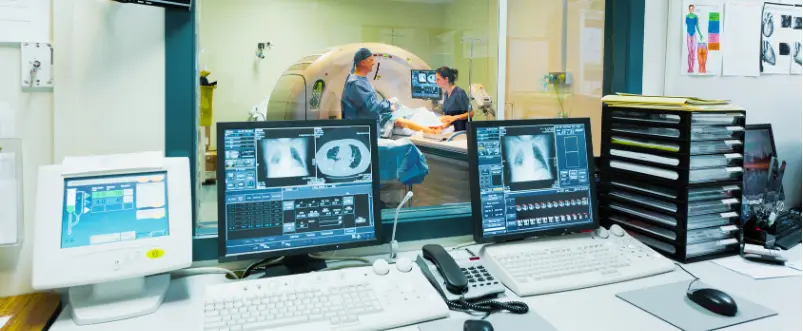
A radiation-emitting medical device is regulated twice over. The Ministry of Health treats it as a medical device requiring distribution and marketing authorisation. The Nuclear Energy Regulatory Agency, BAPETEN, treats the same device as an ionising radiation source, licensed under Undang-Undang No. 10 Tahun 1997 tentang Ketenaganukliran, Article 17 paragraph (1), which requires a licence for every utilisation of nuclear energy.
Most medical device registration projects have one regulator and one critical path, where delay is generally traceable to document quality or query response time. A radiation-emitting device has two regulators whose processes are legally independent of one another, and neither treats the other’s approval as its own general prerequisite. This is what separates a medical device registration Indonesia radiation project from a standard device filing.
What Order Should the Licences Be Obtained In? A Direct Answer
Entity-level authorisation on both the health side and the nuclear side must exist before any product-level or shipment-level work has legal effect. Radiation protection personnel certification sits beneath both, because it runs on fixed training and examination cycles rather than on demand. Once the entity is authorised, the medical device technical file and the BAPETEN import documentation can be prepared concurrently. The end user’s BAPETEN utilisation licence is a separate project that the distributor does not control but that can still block delivery.
The Two Regimes Governing a Radiation-Emitting Medical Device
Ministry of Health: izin edar alat kesehatan radiasi
Two Kemenkes authorisations apply at different levels. The Izin Distribusi Alat Kesehatan is an entity-level licence held by the distributing company, issued under Peraturan Menteri Kesehatan No. 14 Tahun 2021 tentang Standar Kegiatan Usaha dan Produk pada Penyelenggaraan Perizinan Berusaha Berbasis Risiko Sektor Kesehatan. The izin edar, commonly referenced in this category as the AKL radiation device authorisation, is a separate product-level marketing authorisation that attaches to the individual device and cannot be obtained until the entity licence is in place.
Good distribution practice for medical devices, addressed in Peraturan Menteri Kesehatan No. 4 Tahun 2014 tentang Cara Distribusi Alat Kesehatan yang Baik, applies alongside both authorisations and is examined as part of ongoing compliance rather than as a one-time filing step.
BAPETEN: ionising radiation source licensing
BAPETEN licensing procedure derives from Peraturan Pemerintah No. 29 Tahun 2008 tentang Perizinan Pemanfaatan Sumber Radiasi Pengion dan Bahan Nuklir, with safety and security requirements under Peraturan Pemerintah No. 45 Tahun 2023 tentang Keselamatan Radiasi Pengion dan Keamanan Zat Radioaktif, and business-licensing standards under Peraturan BAPETEN No. 3 Tahun 2021, applied through Indonesia’s risk-based business licensing system.
Three separate BAPETEN authorisations exist within this regime, and treating them as one is the most common analytical error Product Registration Indonesia sees in client project plans. The import licence permits bringing sources into Indonesia. The transfer licence permits passing them to another party. The utilisation licence permits operating them, and it belongs to the end user, not the distributor.
The Licence Dependency Map
The table below sets out ordering and ownership rather than duration. Elapsed time depends on the distributor’s existing licence position, the device type, and whether an application attracts regulator queries, so it is confirmed case by case rather than quoted as a fixed figure.
| Level | Authorisation | Regulator | Held by | Legal basis |
| Entity | Izin Distribusi Alat Kesehatan (distribution licence, radiation category) | Ministry of Health | Distributor | Permenkes No. 14/2021 |
| Entity | Import licence for ionising radiation sources | BAPETEN | Distributor / importer | UU No. 10/1997; PP No. 29/2008 |
| Product | Izin edar / AKL radiation device | Ministry of Health | The device | Permenkes No. 14/2021 |
| Shipment | Transfer licence | BAPETEN | Distributor | UU No. 10/1997; PP No. 29/2008 |
| Personnel | Radiation protection officer certification | BAPETEN | Named individual | UU No. 10/1997; PP No. 45/2023 |
| Facility / end user | Utilisation licence | BAPETEN | Hospital or imaging centre | UU No. 10/1997; PP No. 29/2008; PP No. 45/2023 |
Where Manufacturers Lose the Most Time
Three patterns account for most avoidable delay Product Registration Indonesia has observed across radiation device projects. None is a substantive regulatory difficulty. All three are ordering errors, and all three are avoidable at the planning stage.
- Preparing a complete product technical file while the appointed distributor’s Izin Distribusi Alat Kesehatan does not yet cover radiation electromedical equipment, so the finished file cannot be lodged.
- Discovering the radiation protection personnel requirement only after a launch date has already been communicated internally, turning a documentation task into an unplanned recruitment and training project.
- Treating the Kemenkes and BAPETEN regimes as strictly sequential and waiting for one to conclude before starting work that could have proceeded alongside it.
A Practical Sequencing Approach
The following order reflects how Product Registration Indonesia structures these projects for clients. It is a planning framework, not a self-filing checklist, because each step involves regulator-specific documentation and category classifications that should be confirmed against the current in-force regulation and the device’s specific classification before any filing is made.
- Confirm the appointed distributor’s entity-level status on both sides before product-level work begins, since work prepared for an entity that cannot yet act on it is not progress.
- Start radiation protection personnel certification at the earliest possible point, as it is the element least responsive to money or effort applied late in the project.
- Run the medical device technical file and the BAPETEN import documentation in parallel once entity authorisation is confirmed, rather than modelling the project as two sequential timelines.
- Establish the customer’s utilisation licence status during the sales process where installation is contractually dated, since a distributor’s own completed licensing does not guarantee the end user’s facility is ready to receive the device.
- Where a device model is being added to an existing portfolio, confirm the effect on the existing import licence before shipment planning begins.
Because the allocation of authority between the two regimes has been affected by successive amendments to the nuclear statute and by the migration to Indonesia’s risk-based business licensing system, the current position for a specific device type should be confirmed with both authorities, or through a regulatory partner managing the filing, rather than assumed from a previous project.
How Product Registration Indonesia Supports Radiation-Emitting Medical Device Registration Projects
Product Registration Indonesia provides medical device registration services in Indonesia for both radiation and non-radiation categories, and manages BAPETEN Kemenkes dual licensing specifically through its Radiation Medical Device Registration service, coordinating entity-level, product-level, and personnel-level requirements against a single project timeline rather than two disconnected ones.
Related articles:
IHSS Procurement Indonesia: What Foreign Medical Device Bidders Get Wrong About Registration Timing
Refurbished Medical Devices in Indonesia: What the New Import Rule Actually Permits
Talk to Product Registration Indonesia About Your Radiation-Emitting Medical Device Registration
A radiation-emitting medical device launch rarely fails on regulatory substance. It fails when entity, product, personnel, and facility approvals are pursued in the wrong order. Book a consultation with Product Registration Indonesia’s Radiation Medical Device Registration service to map the dependency structure for your specific device and distributor before filing work begins.