

Indonesia’s diagnostics market has grown fast enough that many manufacturers now assume an in vitro diagnostic product can be registered exactly the way a standard medical device is, using the same dossier, the same timeline, and the same expectations. For most risk classes, that assumption holds up fine. For one specific group of IVDs, it does not, and finding out the gap halfway through a Kemenkes review is an expensive way to learn it.
This guide is written for regulatory managers, distributors, and manufacturers preparing an IVD product for the Indonesian market, whether this is your first Kemenkes filing or your tenth. By the end, you will understand how Indonesia IVD registration compares to a standard medical device filing, where the two pathways genuinely diverge, how risk classification shapes the documentation Kemenkes expects, the mistakes that most often delay infectious disease IVDs, and what to prepare before a dossier is submitted.
Here is the detail most guides skip. Indonesia IVD registration and medical device registration run through the same izin edar system under Peraturan Menteri Kesehatan (Permenkes) No. 62 Tahun 2017. The dossier structure, the reviewing directorate, and the electronic submission channel are identical for both product types.
Based on our regulatory team’s direct filing experience, including input from Dr. Fahrurozi, our IVD registration lead, the pathway only diverges once a product sits in Risk Class D. Class D IVDs need documented clinical evidence before Kemenkes will issue a Nomor Izin Edar (NIE). It goes further for tests that diagnose diseases that already circulate widely in Indonesian society, such as HIV and hepatitis. Evaluators routinely request additional efficacy testing on these specific products, on top of the standard clinical evidence package a Class D orthopedic implant would need. That distinction is not spelled out in the regulation text. It is how the evaluation team applies it in practice, and it is the detail that most affects an infectious disease IVD’s real timeline to market.
What Are the Differences Between IVD and Medical Device Registration in Indonesia?
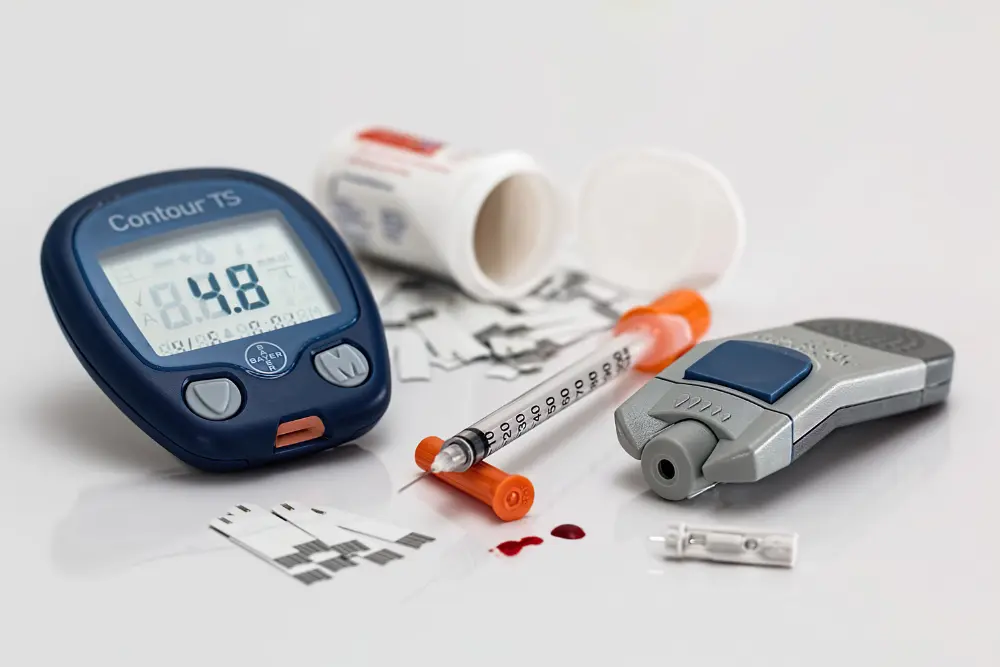
Both product categories are defined and licensed under the same instrument: Permenkes No. 62 Tahun 2017 tentang Izin Edar Alat Kesehatan, Alat Kesehatan Diagnostik In Vitro dan Perbekalan Kesehatan Rumah Tangga. The obligation to hold a distribution licence before circulating either product type also traces back to Undang-Undang No. 17 Tahun 2023 tentang Kesehatan, Pasal 143.
A foreign IVD manufacturer cannot register directly. Registration must run through an Indonesian legal entity, either a PT PMA or a locally licensed distributor acting as Local Authorized Representative, exactly as required for a conventional medical device.
Put simply, IVD vs medical device registration in Indonesia is not a story of two separate systems running in parallel. It is one shared izin edar pathway, reviewed by the same Kemenkes directorate, submitted through the same portal. The one place the paths genuinely separate is Class D, where IVDs must carry documented clinical evidence, and where IVDs for communicable diseases such as HIV and hepatitis face an added efficacy testing step that a Class D orthopedic implant or cardiac device never encounters.
| Element | Medical Device (Class A–C) | IVD (Class D, infectious disease) |
| Governing rule | Permenkes 62/2017 | Permenkes 62/2017 + evaluator-applied efficacy step |
| Legal entity in Indonesia | Required (PT PMA or LAR) | Required (PT PMA or LAR) |
| Submission channel | OSS-RBA and regalkes.kemkes.go.id | OSS-RBA and regalkes.kemkes.go.id |
| Clinical evidence | Not required at Class A–C | Required, plus added efficacy data for infectious disease tests |
| Pre-market evaluation in Indonesia | Not required at Class A–C | Required, especially for HIV and Hepatitis kits |
Indonesia IVD Classification Risk Level: Class A to Class D
Indonesia IVD classification risk level follows the same four-tier, ASEAN-aligned scheme used for medical devices, set out in Permenkes No. 62 Tahun 2017. The class is not just a label attached to a product for filing purposes. It decides how thick the technical file needs to be, whether a laboratory test report is sufficient or a full clinical study is expected, roughly how long Kemenkes takes to review the submission, and what happens later if the product turns out to have been misclassified from the start.
Classification is based on intended use and the consequence of an incorrect result, not on how complex the device looks on a shelf. A simple lateral flow cassette can still land in Class D if a false negative or false positive carries serious clinical consequences, such as missing an active HIV or hepatitis infection. Manufacturers who classify by device format rather than by clinical consequence are the ones most likely to have their classification challenged during Kemenkes review, and a challenge at that stage resets the evaluation clock rather than simply adjusting it.
| Class | Risk Level | Typical IVD Examples | Clinical Evidence |
| A | Low | General lab reagents, basic specimen collection devices | Not required |
| B | Low–moderate | Pregnancy and ovulation self-tests, basic glucose strips | Not required |
| C | Moderate–high | Tumour marker assays, hormone panels, clinical chemistry analyzers | Case by case |
| D | High | Blood-borne pathogen tests including HIV and hepatitis kits, blood screening reagents | Required, plus efficacy data for infectious disease tests |
Kemenkes IVD Approval Process, Step by Step
The Kemenkes IVD approval process mirrors the medical device pathway administratively. The following sequence reflects how a dossier moves through Kemenkes, drawn from Permenkes 62/2017 and our team’s filing experience.
- Confirm legal entity status: appoint a Local Authorized Representative or establish a PT PMA to hold the NIE.
- Determine risk classification (Class A to D) before assembling the technical dossier, since the class sets documentation depth.
- Prepare the ASEAN Common Submission Dossier Template file, including labeling in Bahasa Indonesia and quality system evidence such as ISO 13485.
- Submit through regalkes.kemkes.go.id for administrative and technical verification by the Direktorat Jenderal Kefarmasian dan Alat Kesehatan.
- For Class D IVDs, submit clinical evidence aligned with Permenkes No. 63 Tahun 2017 tentang Cara Uji Klinik Alat Kesehatan yang Baik.
- For infectious disease IVDs, respond to the evaluator’s request for supplementary efficacy data, a step our team sees applied specifically to HIV and hepatitis diagnostics.
- Receive the Nomor Izin Edar and maintain post-market obligations, including any renewal filing before expiry.
In our experience, evaluation timelines and applicable government fees vary by class, product novelty, and the completeness of the first submission, so we do not quote fixed figures here. Speak with our team for a timeline estimate specific to your product.
Where IVD Registration Filings Usually Go Wrong
Most delays we see in Indonesia IVD registration are not caused by Kemenkes moving slowly. They come from decisions made early in the filing, often before the dossier ever reaches a reviewer’s desk. The patterns below repeat often enough across different clients and product types that they are worth naming plainly.
The Mistakes We See Most Often
- Classifying a product by device format instead of clinical consequence, then discovering during review that a rapid test actually belongs in Class D.
- Treating the Class D clinical evidence requirement as a checkbox, submitting a generic literature summary instead of data matched to the intended use and target population.
- Assuming an infectious disease IVD only needs the standard Class D package, then losing weeks to a request for additional efficacy data that could have been prepared upfront.
- Appointing a Local Authorized Representative late, after the technical dossier is already finished, which stalls submission even though the product file itself is ready.
- Translating labeling and IFU content word for word instead of adapting it to the format Kemenkes expects, which triggers an administrative rejection before the technical review even starts.
- Losing track of the izin edar renewal window and filing after the lead time Kemenkes expects has already passed.
Two Examples From Recent Filings
The examples below are composites drawn from patterns we see repeat across multiple filings, not a single named client, in order to protect confidentiality.
A manufacturer of a hepatitis B rapid test came to us assuming the product would follow the same review timeline as a similar-looking glucose test it had already registered in Indonesia. Both were lateral flow cassettes, and the dossier had been prepared with the same document depth used for the earlier, lower-risk product. Once Kemenkes reviewed the intended use, the hepatitis test was classified as Class D and returned with a request for clinical evidence and supplementary efficacy data specific to hepatitis detection. Rebuilding the dossier from that point took considerably longer than it would have if the classification had been confirmed before the first submission.
Another client, an importer of an HIV self-test kit, arrived with clinical study data already in hand but had not budgeted time for the efficacy testing step evaluators apply specifically to infectious disease IVDs. The clinical package itself was accepted without issue. The efficacy data request that followed added an extra review cycle the client had not planned for, pushing the product’s market entry back by a full quarter.
Registering IVD in Indonesia for Infectious Disease Testing
Registering IVD in Indonesia for infectious disease detection sits inside a genuinely large and still-growing market. Hepatitis B prevalence fell from 7.1 percent in 2013 to 2.4 percent in 2023 according to Riskesdas data cited by Kemenkes, yet the ministry still classifies Indonesia among the higher-burden countries in Southeast Asia for liver disease.
This scale of testing demand is exactly why the extra efficacy step for Class D infectious disease IVDs matters commercially, not only procedurally. Products that pass this step early reach hospitals, laboratories, and national screening programs sooner than competitors still gathering data.
Because demand is concentrated in specific provinces, disease programs, and procurement channels, we also help clients quantify realistic addressable demand and buyer segments alongside the regulatory filing, so a Class D IVD launch is backed by commercial data as well as an approved licence.
Why Businesses Choose Medical Device Registration Services in Indonesia
Filing an IVD dossier correctly the first time is only half of what decides whether a product succeeds in Indonesia. The other half is knowing whether the market is actually there, and where. Companies that treat those as two separate workstreams, regulatory on one side, commercial research on the other, often end up with an approved NIE for a product that never quite finds its buyers, or a commercial plan built before anyone confirmed the product could be classified the way the business case assumed.
Product Registration Indonesia was built to close that gap. Our regulatory team manages classification, ASEAN CSDT preparation, and Kemenkes correspondence for medical devices and IVDs alike, including the added efficacy testing step that Class D infectious disease diagnostics tend to trigger. Alongside that, we can also provide market intelligence, meaning real data on testing demand, procurement channels, and buyer segments for the specific disease area a client is entering, so the registration decision and the commercial decision are made from the same information rather than two separate guesses.
For a hepatitis or HIV IVD, that combination tends to matter more than usual. Demand is real and well documented, but it is concentrated in specific provinces, national screening programs, and hospital or laboratory procurement channels, and a generic market assumption rarely survives a closer look.
If you are preparing a filing, our Medical Device and IVD Registration service handles the dossier and Kemenkes correspondence end to end, and our License Holder Service in Indonesia can hold the NIE if you do not yet have a compliant local entity.
When market sizing matters as much as the classification itself, our Distributor Selection service in Indonesia pairs regulatory strategy with commercial data on demand, pricing, and distribution reach for infectious disease and other high-risk IVDs.
For a related look at how Kemenkes applies risk-based rules in practice, see our article on Refurbished Medical Devices in Indonesia: What the New Import Rule Actually Permits.
Talk to Our IVD Registration Team
An IVD launch in Indonesia rarely fails because the paperwork was difficult. It usually fails because the classification, the clinical evidence, or the market sizing was settled too late to change course. None of that has to be a surprise. If your product sits anywhere near Class D, or if it diagnoses a communicable disease such as HIV or hepatitis, getting the classification and evidence plan right before you file is the single change that protects your timeline the most.
Our team has walked through this exact fork enough times to know where it usually goes wrong, and how to plan around it from the start. Whether you are still deciding on classification, assembling clinical evidence, or trying to understand the real market size before committing budget, we are glad to look at your product and tell you plainly what to expect.
Reach out through our Medical Device and IVD Registration service page, or submit your request via the form below, and our regulatory team will follow up with next steps for your specific product and class.