

This guide is for distributors and healthcare facilities preparing a BAPETEN licence application, and for manufacturers relying on an Indonesian partner to obtain one. It explains who qualifies as a radiation protection officer in Indonesia, the certification route that leads to a working licence, and what the field and level system means for a project schedule. After reading it, you will know which regulation requires the role, how the certification cycle proceeds from training to examination, and where this requirement sits in your own licensing timeline.
In our experience preparing BAPETEN filings for medical device distributors and healthcare facilities, applicants typically start recruiting a candidate for the radiation protection officer role only after receiving a deficiency notice on their licence application. By that point they discover that entry-level Petugas Proteksi Radiasi Medik Tingkat 2 training runs on a small number of scheduled cohorts a year, seats are shared with hospitals and industrial operators that book ahead through standing training budgets, and a company that starts recruiting after the application is already submitted is queued behind sectors that plan for this months in advance. The regulation text does not say this. It only becomes visible once you have watched a real application stall on it.
What Is a Radiation Protection Officer (Petugas Proteksi Radiasi) in Indonesia?
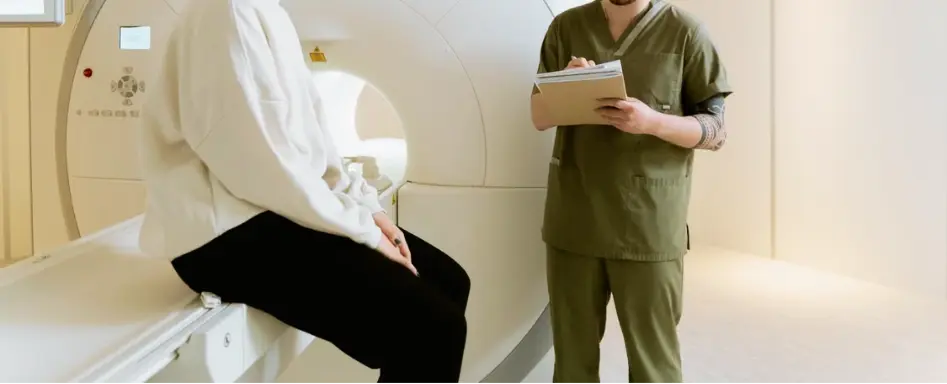
A radiation protection officer, known in Indonesian as Petugas Proteksi Radiasi (PPR), is a designated worker at any installation that uses ionising radiation sources, required to hold an individual working licence before being named in that installation’s BAPETEN application. The requirement applies to hospitals, clinics, and industrial operators of equipment such as diagnostic and interventional X-ray systems, and to any distributor or manufacturer whose Indonesian operation touches a Radiation-Emitting Medical Device.
The legal basis for the role sits in Article 19 of Undang-Undang Nomor 10 Tahun 1997 concerning Nuclear Energy, which requires every designated worker at an installation utilising ionising radiation sources to hold a licence. The requirements for that licence, the Surat Izin Bekerja PPR, are set out in Peraturan Kepala BAPETEN Nomor 16 Tahun 2014 concerning requirements for obtaining a working licence for designated workers at installations utilising ionising radiation sources.
In short: a radiation protection officer in Indonesia is a BAPETEN-licensed individual, holding a Surat Izin Bekerja PPR issued after training and a written, oral, and practical examination, and named in the entity’s own licence application as the person responsible for radiation safety at that installation.
Why This Radiation Protection Officer Licence Cannot Be Accelerated
Most elements of a BAPETEN or medical device licensing project can be compressed. Documentation can be drafted faster, additional staff can be assigned, and consultants can be engaged to close gaps quickly. Certification of a radiation protection officer behaves differently because it depends on an external calendar set by training providers and by BAPETEN’s own examination schedule, not on how much effort or budget a company applies to it.
A company that identifies this requirement while still in the planning stage accommodates it without difficulty, because there is time to enrol a candidate before the training cycle it needs is fully booked. A company that identifies it only after committing to an installation date, an import shipment, or a distribution launch discovers that the binding constraint on the entire project is a training schedule outside its control.
Where the Radiation Protection Officer Requirement Sits Inside Your Licence Application
Personnel qualification is not a separate step that follows entity licensing. Peraturan Pemerintah Nomor 29 Tahun 2008 concerning licensing for the utilisation of ionising radiation sources and nuclear material provides that the technical requirements for a licence application include the radiation protection and safety programme, the safety verification report, health examination results for radiation workers, and personnel qualification data covering the radiation protection officer and other competent personnel. The PPR’s Surat Izin Bekerja is therefore examined as part of the entity’s own application, not confirmed afterward.
Radiation safety and security requirements generally are now governed by Peraturan Pemerintah Nomor 45 Tahun 2023 concerning radiation safety and radioactive substance security, which should be read alongside PP 29/2008 for the current compliance picture.
The Certification Route: From Training to Surat Izin Bekerja PPR
Certification proceeds in a fixed order, and each stage depends on completion of the one before it. The route below applies to the medical field; industrial and nuclear installation fields follow the same structure with different training content.
- The candidate completes radiation protection officer training delivered by a BAPETEN-authorised training provider, typically a university or health polytechnic, in either online or in-person format with practical components conducted face to face.
- The candidate must pass that training before being permitted to sit the licensing examination.
- The candidate sits the BAPETEN licensing examination, conducted in three parts, written, oral, and practical, administered by a BAPETEN examining team, usually at the training institution, on scheduled dates.
- On passing, BAPETEN issues the Surat Izin Bekerja PPR, and the individual can then be named as the radiation protection officer in the entity’s own licence application.
Reported examination cohorts are small. Sessions have been documented with participant numbers in the twenties and forties, drawn from hospitals, health facilities, and industrial companies across several regions sitting the same fixed dates. Small cohorts on fixed dates are the structural reason this requirement cannot be compressed by adding budget or staff.
PPR Medik Tingkat 2 and Other Field and Level Classifications
BAPETEN personnel licences are not generic. Certification is differentiated by field, medical, industrial, or nuclear installation, and by level within each field, and the qualification a company needs depends entirely on what its equipment does. Enrolling a candidate in the wrong field or level consumes a full training and examination cycle without producing a licence the application can use.
| Field | Typical qualification | Applies to |
| Medical | PPR Medik Tingkat 2 | Diagnostic and interventional radiology X-ray equipment, per BAPETEN’s own description of this level |
| Industrial | PPR Industri, graded levels | Gauging, radiography, and other industrial radiation sources, at a level matched to the specific source category |
| Nuclear installation | Addressed separately from medical and industrial fields | Nuclear installations, outside the scope of most medical device or distribution licensing projects |
Confirming the required field and level against the specific equipment before enrolling anyone is not a refinement of the process. It is the single decision that determines whether the training and examination cycle produces a licence the application can actually use.
The Parallel Requirement Under Ministry of Health Distribution Rules
The requirement is reinforced from the health-sector side as well as the nuclear side. In our experience, distributors of radiation electromedical equipment are expected to evidence a radiation protection officer’s Surat Izin Bekerja within the medical device distribution licensing process, alongside the technical person in charge required of medical device distributors generally under Peraturan Menteri Kesehatan Nomor 14 Tahun 2021. This point should be verified against the current annex to the applicable Ministry of Health regulation before being relied on, and is flagged here for SME confirmation.
The practical consequence is that a company cannot satisfy one authority by deferring the requirement to the other. BAPETEN and the Ministry of Health both examine personnel qualification, from different statutory angles, and a gap on either side can stall a licence that otherwise looks complete.
For how this personnel requirement fits alongside the Ministry of Health and BAPETEN device approval sequence more broadly, see our related article, Radiation-Emitting Medical Device Registration in Indonesia: Sequencing BAPETEN and Kemenkes Approval.
Sequencing the Radiation Protection Officer Requirement Into Your Project Plan
- Position radiation protection officer certification at the start of the project plan. It is upstream of the entity’s licence application, which is upstream of import, distribution, or installation activity.
- Confirm the required field and level against the specific equipment before enrolling a candidate. Treat this as a question for BAPETEN or a specialist adviser rather than an inference from general material.
- Where an entity already holds a licence, confirm the named officer remains in post. Departure of the individual raises a gap that is better found internally than during an inspection.
- Where a foreign manufacturer relies on an Indonesian partner, verify the partner’s certified personnel position directly rather than assuming it, alongside the partner’s licence documents.
- Do not plan on the assumption that a certification cycle can be brought forward. Training and examination dates are set by providers and by BAPETEN, not by the applicant.
Limitations of This Guide
This article states the statutory basis and structure of the certification route as understood at the time of drafting. It does not state the qualification required for any particular equipment type, which depends on the source and its application and should be confirmed with BAPETEN. It gives no fixed durations or fees, because these vary by provider, period, and case. The description of the Ministry of Health distribution requirement reflects the requirement as applied in practice and should be verified against the current annex to the applicable regulation. Peraturan Kepala BAPETEN Nomor 16 Tahun 2014 is cited as the operative instrument for the Surat Izin Bekerja PPR based on the source material for this article; public filings suggest a newer Peraturan Badan Pengawas Tenaga Nuklir may have since revoked or replaced it, and this should be confirmed by SME review before publication. Certification requirements and level definitions are subject to amendment and should always be checked against the current regulatory text before being relied on.
Get Your Radiation Protection Officer Requirement Right the First Time
Personnel qualification turns part of a device licensing project into a training project, and it does so from the very start. It is examined within the licence application itself, it is required from both the BAPETEN and Ministry of Health directions, and it runs on a calendar the applicant does not control.
Our Radiation Medical Device Registration service confirms the field and level your equipment requires, checks your named officer’s licence status against the entity’s application, and coordinates the BAPETEN and Ministry of Health approval sequence so personnel certification does not become the item that stalls your launch.
Book a consultation with our Radiation Medical Device Registration team before you set an installation, import, or launch date. We will confirm which BAPETEN personnel licence your project actually requires, so certification timing is built into your plan rather than discovered after a deficiency notice.