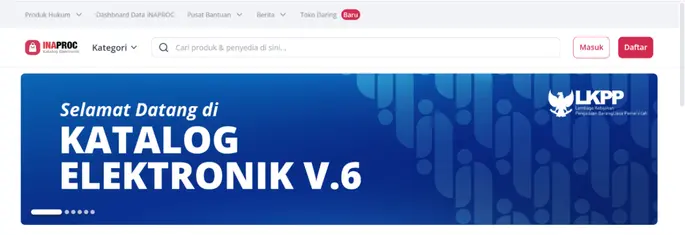


The Indonesian government’s digital transformation in procurement under Perpres No. 17/2023 mandates the acceleration of digital procurement processes. This covers all government ministries, agencies, and regional administrations. For the healthcare sector, this translates to a critical shift toward the electronic catalog system. This national system is currently transitioning to its sixth iteration.
The primary objective is to enhance transparency, efficiency, and accountability in the acquisition of medical supplies by government hospitals. This system transition is a fundamental requirement for market access. Securing your E-Katalog v6 registration is an absolute prerequisite for any substantial government tender participation in Indonesia starting in 2026.
Executive Summary: The Shift to Digital Procurement
The regulatory landscape for medical device registration Indonesia is undergoing a significant operational transformation. The shift from the legacy Version 5 system to the improved Version 6 introduces a Centralized Account Management system. This specifically utilizes the national e-procurement platform known as INAPROC.
This change fundamentally alters how stakeholders interact with the national regulatory body. It demands a more integrated approach from manufacturers and distributors.
Key Aspects of the INAPROC Account Setup Transition

A major update is the centralized user identity and access via system integration. In the prior Version 5 state, separate and redundant login credentials were required for various regulatory and procurement activities.
Now, the INAPROC account setup serves as the single authenticated gateway for accessing the system. This creates a unified digital identity for each company. It links their regulatory filings directly to their profile as a recognized government vendor. This streamlines the administrative burden and enhances security through a singular point of authentication.
This profoundly impacts the medical sector through better efficiency and data integrity. By centralizing account management, the system improves data consistency and reduces manual errors. The corporate data used for medical device registration Indonesia will now be inherently linked to the official INAPROC platform data.
The integration facilitates a more cohesive flow between getting devices approved and selling them to public hospitals. Compliance with Version 6 and the corresponding INAPROC account setup is becoming mandatory. This applies to all companies involved in import and distribution to ensure universal adherence.
The Technical Framework for Medical Device Registration Indonesia
This comprehensive update is designed to modernize the technology stack and instill greater transparency. This framework applies to manufacturers, their authorized representatives, and local distributors. It outlines the technical documentation and quality management system prerequisites required by the regulatory body. It also covers post-market surveillance obligations essential for demonstrating product safety and efficacy.
Key components include compiling a complete product technical file or design dossier. You must establish a file for each product encompassing design, manufacturing, testing, and clinical data. This includes detailed product specifications, risk management documentation like ISO 14971, and conformity evidence. You must also provide test reports for electrical safety or biocompatibility and labeling samples.
Another key component is Quality Management System certification. Manufacturers must implement a robust QMS meeting recognized standards like ISO 13485. Verification requires providing valid QMS certificates from accredited bodies. Distributors must also demonstrate adequate controls over storage and distribution through Good Distribution Practice guidelines.
Applicants must present clear evidence that the product has undergone a proper conformity assessment route. This process may involve third-party testing, notified body certification, or a signed declaration of conformity. Furthermore, you must establish proactive post-market surveillance and vigilance systems. This includes reporting adverse events, handling customer complaints, and conducting periodic safety updates.
Compliance is an ongoing obligation rather than a one-time event. Manufacturers and distributors must document any changes to product design or manufacturing processes. These changes must be assessed for regulatory impact and communicated to authorities. Periodic renewal hinges upon continuous technical compliance maintenance.
Regulatory Landscape and Legal Basis
The framework governing the procurement of medical devices and pharmaceuticals involves a hierarchy of governmental bodies. This landscape is designed to ensure transparency, quality, and fair competition in LKPP procurement.
Oversight is fundamentally shared between two critical governmental institutions. The National Public Procurement Agency, or LKPP, is the apex body for all government procurement activities. They set the overarching policies and digital infrastructure for state spending on medical supplies. Their purview ensures standardized and corruption-free processes across all sectors.
The Ministry of Health acts as the sector-specific regulator prioritizing public health and safety. The Ministry controls registration pathways, quality assurance, and the medical device distribution license requirements. They also manage post-market surveillance for in-vitro diagnostics and household health products. Their regulations directly impact what products can be legally offered for LKPP procurement.
Recent regulatory updates reflect a strong move toward greater digital efficiency. LKPP Circular Letter No. 2/2025 mandates the deactivation of the older Version 5 system. This pivotal policy signifies a complete transition to consolidate procurement activities onto a robust digital platform. This deactivation mandates that all LKPP procurement activities utilize the updated system for accelerated transaction times.
Minister of Health Regulation Number 11 of 2025 provides updated standards for distribution and digital reporting. This regulation updates the operational requirements for the medical device distribution license and marketing authorizations. It focuses on stricter adherence to Good Distribution Practice standards. Furthermore, it mandates comprehensive digital reporting of all distribution and sales activities to the Ministry’s integrated system.
E-Katalog Market Tiers and Segmentation
The national catalog system is segmented to accommodate the specific regulatory requirements of different government levels. The National Catalogue is managed directly by the LKPP for products with widespread use. Listing here allows vendors to target the entire Indonesian public sector market.
The Sectoral Catalogue is specifically managed in partnership with the Ministry of Health. It is dedicated exclusively to medical devices, pharmaceuticals, and health-related products. Products listed here must meet stringent quality and safety standards.
The Local Catalogue allows for targeted procurement at the provincial or city level. It enables regional governments to prioritize specific products not covered in the national tiers. This encourages local economic development and faster supply chain responses for regional health crises.
Phase 1: Institutional Pre-requisites and the Distribution License
Before catalog entry, the entity must secure its status as a legal provider. This begins with Online Single Submission Risk Based Approach integration to validate your business identification number. Next, you must secure the foundational licensing pillars.
The most critical pillar is obtaining your active medical device distribution license, known locally as IDAK. You must also possess CDAKB certification to prove quality management in the supply chain. Finally, you must verify your active marketing authorizations issued via the REGALKES portal.
Phase 2: INAPROC Account Setup and Centralized Identity
Version 6 introduces a unified identity management system designed to eliminate data silos. Securing your INAPROC account setup involves three core pillars. First, the platform enforces enhanced digital identity verification for key personnel like directors and administrators.
This includes mandatory electronic Know Your Customer integration for all designated representatives. The system also integrates with certified digital signature providers like Privy. This confirms the authenticity and legal authorization of the individuals managing the company profile.
Second, the system mandates company sourcing and linking for strict compliance. Companies must synchronize their official Tax Identification Number with national tax databases. Linking your business registration number from the OSS system is also required to verify your legal business scope.
Third, the platform utilizes real-time sanction screening via an automated blacklist check. The platform performs real-time validation against the national public procurement agency blacklist. Any company or individual found on this list will be immediately flagged and blocked from the system.
Phase 3: Product Listing, Bulky Upload, and Data Integrity
The current technical landscape focuses heavily on enhancing data integrity and streamlining large portfolio submissions. A critical area of focus is the synchronization between the Kamus Farmasi dan Alkes system and the Regalkes system. Absolute consistency in the primary email address used across both platforms is a non-negotiable requirement.
This email address serves as a unique digital identifier linking crucial data. It synchronizes product data, company data, and approval information across government platforms. Any discrepancy in this email address will inevitably result in a systemic failure to link the corresponding records.
Failing to establish this data link halts the registration process entirely. It also blocks companies from renewing existing product licenses and creates siloed data integrity errors. Companies must treat the registered email address as a central, immutable regulatory credential.
To optimize submissions, the Version 6 interface introduces a highly requested bulky upload feature. The previous system relied heavily on manual entry that proved inefficient for extensive product portfolios. Registrants can now upload consolidated data files in spreadsheet format for multiple products simultaneously. This drastically reduces administrative burdens and accelerates time to market.
Enhanced Technical and Pricing Compliance for Public Tenders
Compliance requirements have heightened concerning national economic policy and pricing transparency. Manufacturers must now navigate increasingly stringent requirements surrounding the TKDN threshold or Domestic Content Level. The most critical benchmark is the forty percent TKDN threshold.
Products certified to meet or exceed this level are afforded preferential treatment within government procurement processes. Meeting the TKDN threshold is particularly important for lucrative public sector contracts. Failure to achieve this level can severely restrict a product’s access to government hospital networks.
Furthermore, registrants must comply with detailed cost disclosure mandates. This promotes fairness, prevents undue markups, and ensures value for money. Registrants are no longer permitted to submit general aggregate price figures. They must furnish a granular breakdown of their product’s final pricing structure.
This includes direct production costs associated with manufacturing, raw materials, and direct labor. It also covers indirect overhead costs like administrative salaries, utilities, and regulatory compliance fees. Most importantly, registrants must explicitly state their profit margins and justify them against prevailing industry standards.
This mandate shifts the burden of proof onto the registrant to demonstrate the legitimacy of every cost component. Government entities can accurately assess reasonableness, identify anomalies, and negotiate effectively using this verifiable data.
Critical Success Factors and Price Negotiation Dynamics
Success requires careful timeline management to account for lengthy evaluation windows versus immediate catalog synchronization. Proper post-market surveillance reporting is also essential to maintain your listing eligibility. Failure to report distribution data can lead to temporary product suspension.
The introduction of the new system has not eliminated the critical human element of procurement. Electronic purchasing does not equate to a purely automated transaction with fixed prices. The Commitment Making Officer, or PPK, retains core fiduciary responsibility and negotiation authority.
The PPK is empowered to initiate and manage mini-competitions when multiple vendors are available. Their authority explicitly includes the right to negotiate prices, terms, and specifications directly with vendors. The listed price serves as a ceiling price rather than an unassailable final price.
Vendors must anticipate that a listing on the electronic catalog is only the first step. The actual award will likely follow a competitive negotiation process led by the PPK. The final transaction blends automated platform management with traditional fiduciary oversight.
Conclusion: The Future of Public Procurement
The transition to this latest iteration marks a pivotal moment in the modernization of public spending. This new version has demonstrably ushered in a new era of efficiency and accountability. The key measurable improvements center on speed, transparency, and traceability.
The enhanced digital architecture and standardized document submission templates have significantly reduced bureaucratic friction. Real-time visibility into the tender process minimizes the opportunity for collusion and corruption. Every action within the system is logged with an unalterable digital footprint to provide unprecedented accountability.
Foreign manufacturers aiming to participate in public procurement must adapt their entry strategy. Success requires navigating the sophisticated regulatory landscape efficiently rather than just having a competitive product. We strongly recommend leveraging local partners with robust compliance capabilities.
Local partners understand the nuances of product registration, local content rules, and technical standards. They expedite the process of obtaining necessary permits and act as a buffer against compliance risks. Pairing product excellence with local expertise is the single most effective strategy for capturing market share.
Navigate E-Katalog v6 Registration Successfully with Product Registration Indonesia
Managing your E-Katalog v6 Registration internally can quickly drain your corporate resources and delay market entry. Navigating the granular pricing disclosures, system synchronizations, and compliance audits requires dedicated local expertise. This is where Product Registration Indonesia steps in to accelerate your journey.
印度尼西亚产品注册 provides comprehensive regulatory support for global medical device manufacturers and distributors. We handle the intricacies of digital integration, local content calculations, and government licensing so your team can focus on commercial growth. Partner with us today to secure your platform registration swiftly, compliantly, and without the bureaucratic headaches.