

In the bustling traditional markets of Java and the high-tech processing plants of Kalimantan, a major shift is occurring. It is a transition that bridges the sacred rituals that started in the 7th century with the rigorous veterinary science of the 21st century. At the heart of this evolution lies a complex question: In the journey from farm to fork, what is the most humane path for the animal?
As businesses prepare for the upcoming enforcement of the Indonesia Halal Mandate 2026, moving beyond simple checkbox compliance is essential. Companies must fully grasp the physiological, ethical, and regulatory nuances of modern meat processing. Understanding these factors is key to driving organic consumer trust and securing absolute market leadership.
The Great Convergence: Tradition Meets Technology
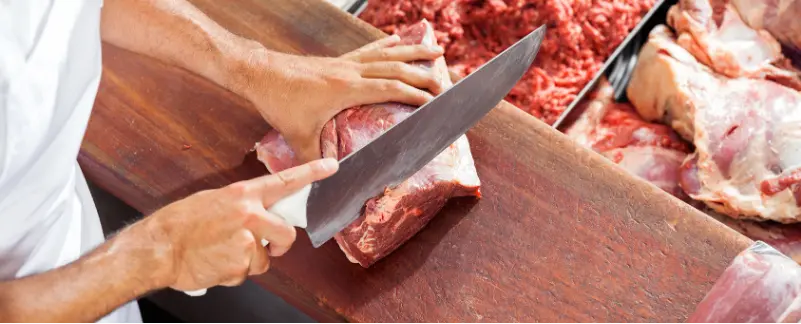
This shift represents a profound change in the national consciousness. In the wet markets of Jakarta and Surabaya, the Juleha, who serve as the official certified halal slaughterer personnel, are now being trained rigorously. They learn the sharp precision of the blade alongside the biological indicators of animal stress.
Meanwhile, in Kalimantan’s emerging industrial hubs, automated production lines are being carefully recalibrated. This ensures that operational efficiency never comes at the cost of Ihsan, the Islamic mandate for excellence and mercy.
This historic convergence is being actively codified by the halal product assurance agency, known locally as BPJPH, alongside the Ministry of Agriculture. Under the recently enacted Minister of Agriculture Regulation, animal welfare has been elevated from a best practice to a legal foundation for livestock management.
This means that the definition of Halal is expanding to include the entire life cycle of the livestock. This framework ensures that the commercial meat is not only Halal (permissible) but also Thayyib (pure, wholesome, and ethical).
Navigating the Critical Framework of the Indonesia Halal Mandate 2026
The fast-approaching October deadline marks a defining watershed moment for the global food industry. According to official government regulations, the statutory grace period is officially ending for micro, small, and medium enterprises (MSMEs) as well as specialized slaughtering services.
After this date, every single link in the agricultural supply chain must be fully certified. This mandate extends from the rural poultry collectors to urban cold chain logistics providers.
Those who view the Indonesia Halal mandate 2026 merely as a bureaucratic hurdle risk being left behind in a highly competitive market. Conversely, companies that lean into the operational shifts by choosing high welfare methods are discovering that Halal is becoming the new Organic in terms of consumer trust.
In a market where 72% of consumers indicate a willingness to pay a premium for ethically sourced products, integrating advanced animal welfare solutions is a smart strategic investment rather than a functional cost.
Why the Reversible Stunning Method is Becoming the National Standard
The continuous dialogue between the Indonesian Ulama Council (MUI) and veterinary scientists has successfully yielded a uniquely Indonesian solution: the reversible stunning method.
By utilizing non-penetrative percussive bolts for cattle and carefully calibrated electrical water baths for poultry, producers can effectively ensure:
- Immediate Insensibility: Eliminating the animal’s ability to perceive physical pain during the incision.
- Biological Integrity: Ensuring the heart continues to beat normally, allowing for the thorough bleed out required by both Sharia and modern food safety standards.
- Market Versatility: Meeting the strict welfare demands of international export markets while remaining 100% compliant with local religious mandates.
The Physiological Debate: Where Science Meets the Blade
For decades, the central tension in animal slaughter has been the perception of pain. This is a complex neurological event that occurs in the vital milliseconds between the restraint of the animal and its final heartbeat.
To understand which specific processing method is more hurtful, we must look beyond the surface level. We must carefully examine the neurobiology of the livestock during its final moments.
This is exactly where the cold precision of veterinary science meets the sharp edge of the ritual blade.
The Case for Stunning: Immediate Insensibility
Modern animal welfare science, championed by global organizations like WOAH (World Organisation for Animal Health), operates primarily on the principle of insensibility. The objective is straightforward: to disconnect the brain’s ability to process sensory input before any trauma occurs.
By inducing immediate unconsciousness, the animal is rendered brain-dead to pain while its physiological systems, such as the heart, continue to function for the slaughter.
In Cattle, the percussive knockout typically involves a non-penetrative captive bolt. Unlike penetrative bolts used in non-Halal settings, the non-penetrative version delivers a high-velocity percussive blow to the frontal bone.
This creates a massive, localized concussion that causes an immediate stunning of the cerebral cortex. Neurologically, the animal enters a state of tonic-clonic seizure where pain signals from the peripheral nervous system simply cannot be registered by the brain.
In Poultry, this is achieved through a calibrated electrified water bath within industrial settings. As the birds pass through the water, a controlled current flows through the brain, causing an instant grand mal seizure.
When the voltage is mapped correctly to the bird’s resistance, it ensures they reach the mechanical or manual blade in a state of deep, reversible anesthesia.
When executed with precision, stunning eliminates the stress of the wait and the pain of the cut. However, the scientific community acknowledges a critical caveat: The Human Factor.
A poorly delivered stun due to an improperly aimed bolt or an underpowered current is a double trauma. It can leave the animal paralyzed but conscious, or merely injured and in acute distress. This highlights that the most humane method is only as good as the operator’s expertise, or even potentially impacted by a lack of maintenance.
The Case for Ritual Cut (Non-Stun): The Natural Transition
Traditional Halal slaughter, or Dhabihah, relies on a fundamentally different physiological mechanism: Cerebral Ischemia, which is the rapid deprivation of oxygen to the brain.
By using a razor-sharp knife, which is often described as being sharper than a surgical scalpel used to sever the carotid arteries, jugular veins, trachea, and esophagus in one swift motion, the blood pressure in the brain collapses.
Proponents and some researchers argue that this rapid drop acts as its own form of natural stun. There are three key physiological arguments for this:
- The Gate Control Theory: If the knife is sufficiently sharp and the cut is fast enough, the initial incision may happen faster than the nervous system can transmit a high-intensity pain signal to the thalamus. The animal feels the touch, but the pain is bypassed by the immediate onset of shock.
- Instant Hypotension: The brain requires a constant, high-pressure flow of oxygenated blood. When the carotids are severed, the brain’s power supply is cut. Within seconds, the animal loses consciousness due to the lack of oxygen (hypoxia), effectively falling into a deep faint before the body’s pain processing centers can fully react to the injury.
- The Bleed-Out Advantage: Some studies suggest that the natural thrashing or convulsions of a non-stunned animal, often mistaken by onlookers as a sign of pain, are actually involuntary muscle contractions that help pump blood out of the carcass more efficiently.
In Indonesia’s humid, tropical climate, a more complete bleed out is a significant food safety factor. It reduces the moisture and nutrient bed that bacteria like Salmonella or E. coli need to thrive, thereby extending the meat’s shelf life.
The Verdict of the Lab
While the debate continues, the hurt is increasingly measured by EEG (Electroencephalogram) readings. Scientific consensus suggests that while both methods aim for mercy, stunning provides a more consistent buffer against human error.
Conversely, the ritual cut offers a cleaner biological transition when performed by a master practitioner. For the Indonesian exporter or producer, the choice between these two often comes down to the LPH (Halal Inspection Agency) requirements and the specific demands of the target consumer demographic.
The “Halal-Modernist” Synthesis: Indonesia’s Solution
Indonesia, the world’s most populous Muslim nation and a burgeoning leader in the global Islamic economy, has pioneered a middle path that elegantly satisfies both the spiritual soul and the modern scientist.
This approach is not merely a compromise; it is a sophisticated regulatory framework that recognizes animal welfare as an inherent component of religious devotion. The Indonesian Ulama Council (MUI), through its landmark Fatwa, established the blueprint for what is now internationally recognized as Halal Stunning.
This synthesis transformed the industry, moving away from a binary Stun vs. No-Stun conflict and toward a technologically integrated system that ensures the meat is both Halal (permissible) and Thayyib (wholesome and ethical).
The Doctrine of Reversibility: The Critical Red Line
The MUI’s ruling is built upon a singular, non-negotiable theological pillar: The Requirement of Reversibility.
In classical Islamic law, the animal must possess Hayah Mustaqirrah, or a state of stable life at the exact moment the blade makes the incision. If an animal dies from the stun itself, it is classified as Maitah (carrion), which is strictly forbidden for consumption.
Therefore, the technology used in Indonesian slaughterhouses must be non-lethal in its standalone application to ensure strict halal meat compliance.
Technically, this means that if the slaughter were aborted after the stun, the animal should be capable of regaining full consciousness and physical function within a short window.
This red line has spurred a wave of innovation in slaughterhouse hardware across the archipelago, leading to the adoption of three primary modernist methods:
- Non-Penetrative Captive Bolts (Cattle): Unlike the penetrative bolts used in many Western facilities that pierce the skull and cause irreversible brain damage, Indonesian certified bolts are mushroom-headed. They deliver a high-velocity percussive blow that induces a massive, temporary concussion. This renders the cow insensible to pain but leaves the brain’s vital centers, responsible for heart and lung function, intact until the ritual cut is performed.
- Low-Voltage Head-Only Electrical Stunning (Sheep/Goats): By applying electrodes specifically to the head rather than the whole body, the current passes only through the brain. This induces a temporary state of epilepsy like unconsciousness without stopping the heart, ensuring a vigorous bleed-out, which is a key requirement for Halal hygiene.
- Precision Water-Bath Stunning (Poultry): In the massive poultry plants of West Java, chickens are passed through an electrified water bath. The voltage and frequency are strictly regulated to ensure the birds are stunned but not electrocuted. To maintain compliance, the dead on arrival (DOA) rates at the stunning point are monitored with clinical precision; even a minor spike in mortality before the blade can invalidate a batch’s Halal status.
Fulfilling the Dual Mandate: Mercy and Law
This synthesis ensures a dual safety mechanism. For the consumer, it provides the peace of mind that the animal was treated with the mercy (Ihsan) commanded by the Prophet, while for the regulator, it ensures the biological requirements of Sharia are met with scientific certainty.
As we approach the critical deadline, this modernist synthesis is no longer an optional premium standard and is quickly becoming the operational baseline. For businesses, mastering this framework is the key to unlocking the Indonesian market.
It proves that your production line respects the deep cultural traditions of the 280 million-strong population while adhering to the highest global standards of veterinary ethics.
Regulatory Landscape and the Role of the Halal Product Assurance Agency
For businesses operating in or exporting to Indonesia, the debate is no longer just ethical and is more of a matter of market access. Under current government rules, the state has signaled that maintaining proper animal welfare regulations is now a core part of food quality benchmarks.
Any meat product circulating in the local market without an official stamp from the halal product assurance agency will face administrative sanctions, including potential withdrawal from retail shelves.
The registration process involves a dual-track verification:
- LPH (Halal Inspection Agency): Conducts the technical audit, verifying whether the stunning method is reversible and whether your certified halal slaughterer personnel are registered.
- MUI (Indonesian Ulema Council): Provides the religious fatwa or decree that the process aligns with Sharia.
A Strategic Advantage for Businesses
Is stunning more hurtful than a manual cut? If the manual cut is performed by a master craftsman with a perfect blade, the difference may be negligible.
However, in the high-volume environment of modern commerce, utilizing a certified reversible stunning method provides a layer of consistency that protects both the animal and the business.
By embracing the Indonesian model, companies can minimize ethical risk, ensure full legal compliance, and achieve the high-quality bleed-out required for premium meat products.
Pada Registrasi Produk Indonesia, we specialize in navigating these complex intersections. Whether you are an international exporter or a local producer, the path to compliance requires verifying every single certified halal slaughterer on your line.
Contact us today for a comprehensive readiness audit to implement high-quality solutions smoothly, and let us help you handle the technical documentation for your official registration under the Indonesia Halal Mandate 2026 guidelines.